Three Hard Lessons for Retail
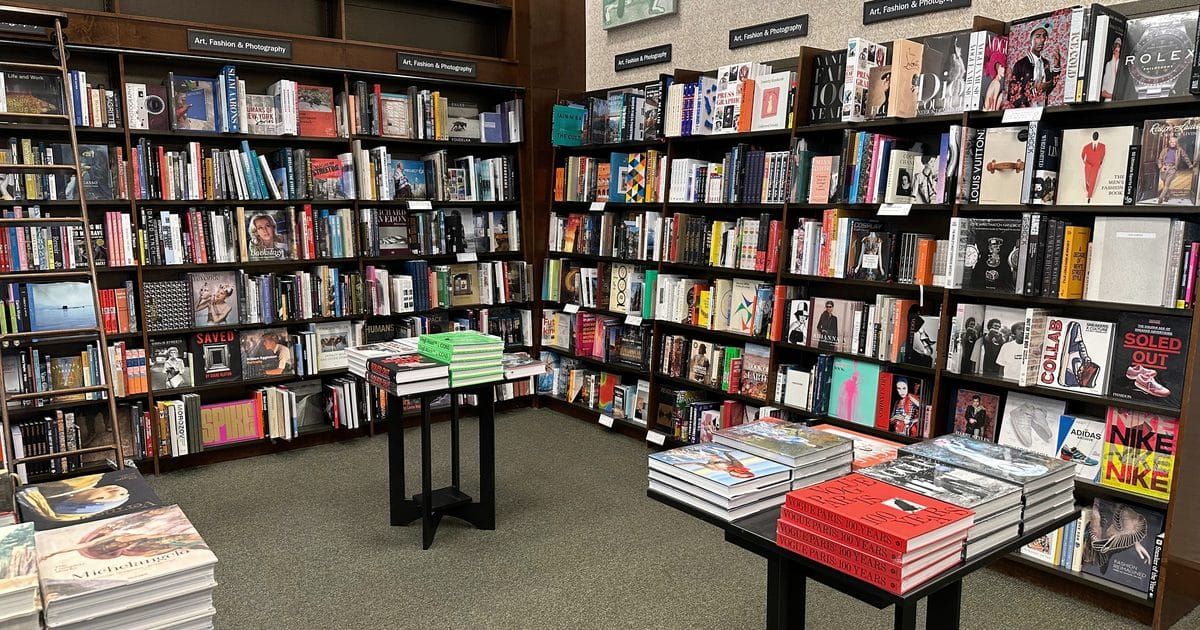
Maybe you've caught some of the past few years' media blitz from Barnes & Noble and their current CEO. Some of it is a little over the top:
“Any design agency would have a heart attack if they could see what we’re doing… we don’t have any architect doing our design at any stage. There’s no interior designer.”
“And certainly the identity people would have a complete crisis,” Mr. Daunt continued, referring to branding consultants. “It’s breaking all the rules.”
But whenever you read about a media-friendly CEO with a shtick about doing everything differently, it's worth thinking about the real strategies underneath the rhetoric. Especially when they're working.
1. Higher Pricing
The most entertaining thing I've read about the new B&N is not from a James Daunt puff piece. It's from a columnist who was scandalized by his experience trying to buy (wait for it) Ray Dalio's Principles:
I went to bn.com and saw that the book, with a publisher’s price of $35, was available at the store and was being sold on bn.com for $27.99. And that $27.99 would have included free shipping to my home…
[At] the store, I was surprised to see that I was being charged $31.50 rather than $27.99. That’s the full $35 list price, less the 10% discount that I get from my Barnes & Noble membership.
When I told the cashier that I thought the price would be $27.99 because that’s what the website said, she asked me to wait for a few seconds. She did some checking, and promptly and cheerfully charged me $27.99. But if I hadn’t asked for that price, I wouldn’t have gotten it…
He's not wrong to feel a little put off by this, or by the company's trolling response:
“We are giving responsibility for pricing books increasing[ly] to our store teams,” Daunt’s statement said. “The objective is for our booksellers to be able to price books in a way most attractive to their customers, rather than simply to follow a corporate instruction. This follows the same principle that now gives our booksellers complete autonomy for how they display books, and how they order their stock.
“Our booksellers, after all, should know much better than a corporate office in which books their own customers are most interested.”
We'll come back to the second part shortly. But if you're bothered by the decline of physical retail, the part about pricing is exactly the kind of trolling that you want to hear more often. Of course there should be a convenience tax for buying a new hardcover book in person, and almost any other book too. Bookstores should not be shy about charging it. It's refreshing to hear a CEO come this close to just saying it outright.
2. Dwell Time and Browsing
Here's another cute sound bite that might give you the wrong idea:
One of Mr. Daunt’s first acts as chief executive was to strip all stores of the footfall counters that many mass retailers use to tally the number of customers and calculate sales rates. That move has cut costs (tracking customers is expensive) and “liberated the bookstore managers, and everybody else, so they could just concentrate on being nice,” he said.
Because traffic still matters a lot, and they still have other ways to measure it, and the counters were probably not all that expensive. And what would it even mean for the store managers to be "liberated" from traffic measures? What's actually going on here?
Well, the metric in question is not traffic per se, but rather conversion, or transactions/traffic. If anything, removing that yardstick could lead to more traffic over time, rather than less—because stores will be more incentivized to bring in low-commitment shoppers.
This is how I put it in a 2018 note to REIT investors, before Daunt took over:
B&N may be more important to the landlord than is commonly assumed. In many power centers, it's a real upgrade to the overall feel of the property... in some, it's the only place to sit down indoors and have a coffee or conversation, or the only kid-friendly option. Maybe you don't need all that square footage to replicate those things, but it wouldn't be as simple as just putting in a Starbucks.
For context, I was (even) more bearish on the average surviving category killer than most retail landlords, or most of Wall Street. So far I’ve been right. But B&N is one of a few where I‘ve held out hope, and this "counterprogramming" effect is one major reason. As other retailers have been obsessing over "streamlined" inventory and staffing, and otherwise racing to turn their stores into cold, lifeless automats... the relative importance of a browsing, lingering and lounging environment is also growing.
As landlords come to appreciate that, the implicit rent subsidy for a tenant like B&N should also increase. But that's not the only way to get paid for dwell time and traffic; if you can't sell these customers enough books, you can sell them more coffee or board games, or lean into in-store advertising and promotional partnerships. The books-first approach of the new B&N is another element that's often overstated; it doesn't have to mean books only.
3. Variety and Discovery
Bookstores, in Mr. Daunt’s view, are fundamentally different from other retail businesses, partly because of the range and variability of the products. Under his leadership, local managers are given a free hand, meaning that the Upper West Side store may offer a shopping experience quite different from the one in Spanish Fort, Alabama.
“The curious trick has been that if you actually let the local book-selling teams do what they think is best, you suddenly get much better bookstores,” Mr. Daunt said. Then he quickly added a caveat: “About a quarter of them become dramatically better, and a quarter become dramatically worse — but it is much easier to focus on that quarter and improve them.”
This is another masterpiece of a PR quote; it gets more confusing each time you read it, but you’re only meant to read it once. Let’s find a better one:
The books themselves [are] optimized for discovery. Many covers face outward instead of spines. Handwritten staff picks float off shelves. Neatly curated tables are organized in clever ways that transcend algorithmic recommendations.
But to look around a Barnes & Noble with him is to see the questions worth thinking about in every nook of the bookstore…
It baffles Daunt that 20% of the chain’s locations sort history books alphabetically by author. “This was a store that had history arranged A-to-Z,” he said last month. “Now it’s chronological.”
There we go. First of all, notice that this is a case of giving local managers less "autonomy for how they display books," and standardizing it across the chain. We've already seen that this "local control" routine is not quite what it sounds like, and here's another example:
Daunt’s ongoing claim that giving more authority to store and regional teams has been a key to turning around the chain also irks independent publishing leaders. While they agree that the new-look B&N stores are more appealing than the older shops, they allege that, contrary to the company’s public messaging, managers at those stores have told them that they can only buy books that have been bought in New York—though they have agency over how many copies of those titles they buy…
Daunt said in fact stores can place their own orders provided “that they are cautious with titles that aren’t carried in our distributor centers…”
OK, so if localization just means localized inventory depth, rather than localized assortments, that's table stakes at this point for a national retailer. It may be taking a little longer because of the unusual wholesale dynamics in the book business, where unsold copies can often be returned to the publisher (or destroyed) for a full rebate. But what's really different about books is in that first line about range and variability; this is the only non-discount retail segment where you can always find something new, however often you visit.
The history books are a perfect illustration. If you're searching by author, you're probably looking for a book you've already heard about, and often one that simply isn't generating enough demand to be worth stocking. Since you've already waited to read it, you're also more likely to take out your phone and order it cheaper online. It's one of these classic long-tail shopping occasions where the internet always wins, right?
Whereas if we sort the history books by time or place, it's more conducive to finding something new. Which activates the instant gratification impulse to pay that brick & mortar markup, and take it home right now.
Crucially, this can work even if we reduce the total number of books in the history section—which makes it the most counterintuitive of our three points, and a corollary to the rule above. Books are one of the only retail categories where you can increase the variety that customers experience while reducing the variety in a given store.
Conclusion
You can see why I called these "hard lessons" for the rest of the retail landscape. There were once similar dynamics with record stores and video rental… but when you're selling anything else, it's getting harder every year to facilitate in-store browsing and discovery, or to charge that offline premium.
Now, there are some categories where you can get still get there at the center level, if not the individual stores; e.g. I've written elsewhere about the potential re-emergence of full price fashion clusters, and I think we're already beginning to see a little of that.
But in the meantime, there are still these general lessons in B&N's comeback, and at least a few opportunities for other retailers to tack in the same direction. It's just important to be clear about what B&N is actually doing.
Articles quoted above:
Barnes & Noble Sets Itself Free [NYT]
Bookstores are Dying. B&N's pricing policy may help explain why [WP]
Independent Publishers Are Fed Up with B&N [Publishers Weekly]
For more on fashion clusters and cotenancy, see my prior note here: